Our experts continuously work on power systems problems, and we share solutions with Practical Reference Articles.
The main topics are earthing system modeling, power cable ratings, HV/LV electrical design, protective device coordination, and arc flash studies. We cover IEC and IEEE standards.
Join 23K+ engineers and get our latest technical articles direct to your inbox as they are released – Jayson Patrick
Key earthing design concepts covered including Grid Potential Rise, design to reduce touch and step voltages, fault current distribution, effects of soil resistivity and use of rods to improve safety along with calculation and modelling examples.
Comprehensive analysis of field inversion, IEC 60287 Standards, finite element modelling, and case studies to optimise HVDC cable ampacity and insulation design.
Charging current in power cables is 10-20 times larger than for overhead lines. The maximum length of cable circuits is determined by their capacitance. This report provides equations and shows how critical cable length depends on voltage level, cable size and frequency.
Voltage Drop Limits per the Wiring Rules AS/NZS 3000 as well as rules of thumb to assist with electrical design. Includes AC and DC voltage drop or rise limits.
Most power cables have a design life of between 20 to 30 years. If the cables are not fully loaded, they are expected to last beyond their design life. The insulation is the weakest part of a cable. Montsinger's Rule states: Insulation life is halved by a temperature increase of 8 to 10 ˚C. An example calculation using the Arrhenius equation is provided.
Earthing rods improve earthing systems when driven into low resistivity soil layers. Due to the proximity effect the rule of thumb is earth rods should be separated by at least their driven length. Rods may be encased in concrete to lower their resistance. Equations are provided for hand calculations and these have been validated with numerical software.
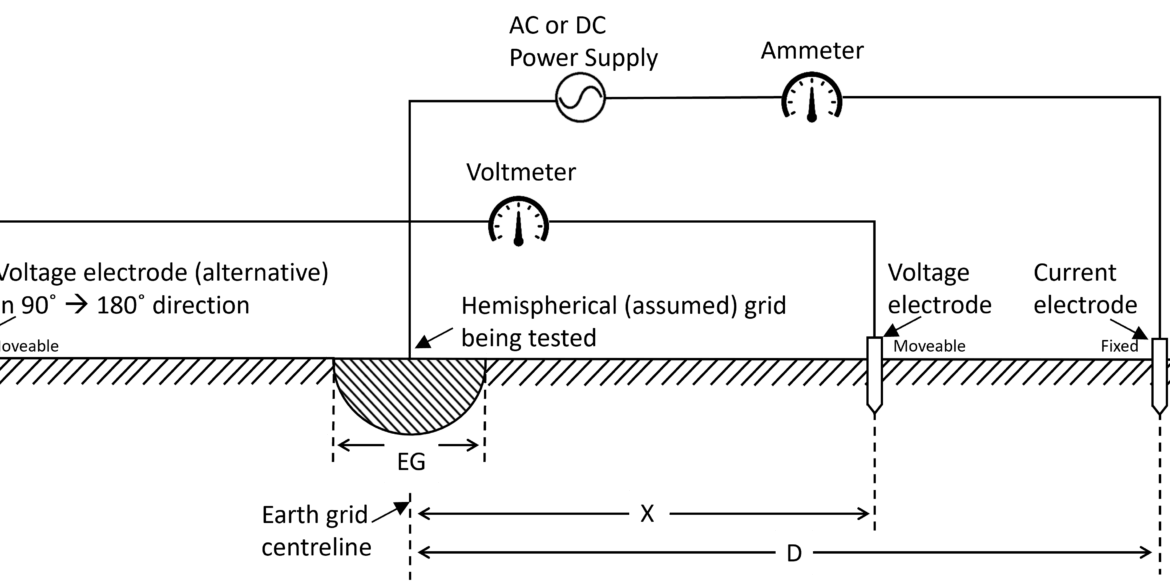
Understand how software simulations enhance grid impedance tests, improving accuracy and efficiency in earthing system design and performance evaluation.