Power Systems Technical Articles

Our experts continuously work on power systems problems, and we share solutions with Practical Reference Articles.

The main topics are earthing system modeling, power cable ratings, HV/LV electrical design, protective device coordination, and arc flash studies. We cover IEC and IEEE standards.

Join 23K+ engineers and get our latest technical articles direct to your inbox as they are releasedJayson Patrick

This field is for validation purposes and should be left unchanged.
Photo of Jayson Patrick for Technical Articles page about electrical power systems Design

Choose the article category

2 mins read
How to model the influence of an additional substances like bentonite surrounding the conductors of a buried earthing system on grid resistance, touch and step voltages.
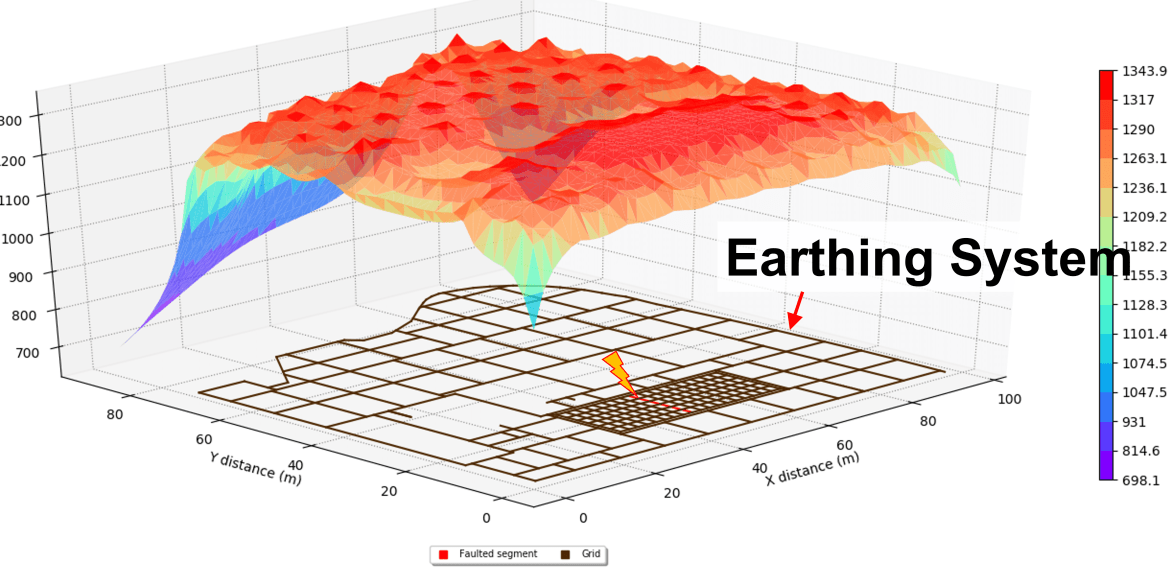
This report shows the effects of a direct lightning strike to an air terminal installed on top of a building which is connected to a buried earthing system.
5 mins read
The methods for calculating the current rating of multiple cables installed in ventilated tunnels are explained with example calculations. Overall tunnel length and air velocity inside the tunnel have a significant impact on cable current ratings.
6 mins read
The Annex H in IEEE Standard 80-2013 contains benchmark case results for comparing and evaluating software tools and methodologies used for the analysis of substation earthing. The results compare the simple equations from IEEE Std 80 with the results given by some of the commercially available software such as CDEGS, ETAP, SGW, SDWorkstation and WinIGS.

1 min read
During an earth fault on a substation earth grid, the flow of current to the earth will produce voltage gradients. An earth grid that is properly designed will safely dissipate current into the ground.
1 min read
The 4 main approaches for determining the maximum demand of an electrical installation are discussed.
3 mins read
Using bentonite to reduce resistance Sometimes it is not possible to achieve the desired reduction in ground resistance by adding more grid conductors or ground rods. An alternate solution is to effectively increase the diameter of the electrode by modifying the soil surrounding.
2 mins read
We have benchmarked our SafeGrid Earthing Software results for a 60 x 60 m grid against well-known software XGSLab™ and CDEGS™. We show that the results for grid resistance in multilayer soils up to 5 layers are virtually identical.
This article shows the effects of soil resistivity and thickness of layers on grid resistance for earthing systems in multilayer soils. Increasing the resistivity of soil layers tends to increase the grid resistance, no matter which soil layer that is. Increasing the thickness of any soil layer with high resistivity also increases grid resistance and if the soil layer thickness is increased for a low resistivity layer then the grid resistance will decrease. Software modelling is performed and the results are compared and shown to match well with those from CDEGS software.
Generic selectors
Exact matches only
Search in title
Search in content
Post Type Selectors